
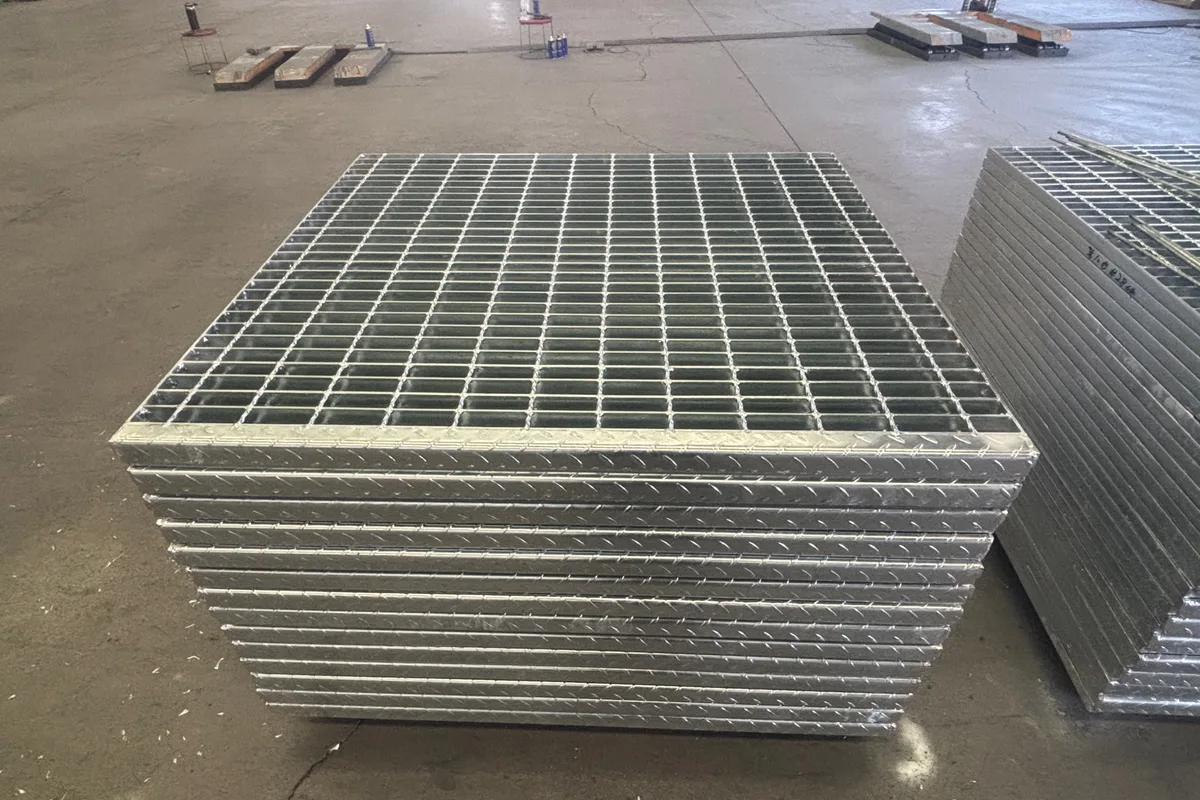
Product and selection guide
Galvanized Steel Grating: specification overview
Hot-dip galvanizing is a surface treatment applied to a completed steel grating or fabricated component. It does not replace the structural specification: bearing-bar size, spacing, span, panel dimensions, cut-outs and attachments must be resolved first.
YB/T 4001.1-2019 points to GB/T 13912 for hot-dip galvanized steel grating. A purchase specification should identify the applicable coating standard and edition, the base steel and fabricated item, inspection documents, appearance expectations and any permitted repair procedure. Coating thickness or service life should not be promised without checking product thickness, environment and the cited standard.
Open grating panel construction
Include this detail in your drawing or enquiry for an accurate quotation.
Project-specific panel dimensions
Include this detail in your drawing or enquiry for an accurate quotation.
Drainage, access and platform applications
Include this detail in your drawing or enquiry for an accurate quotation.
Surface treatment details confirmed per order
Include this detail in your drawing or enquiry for an accurate quotation.
Galvanized grating order data
| Field | What the drawing or order should state | Review point |
|---|---|---|
| Base grating | Bearing bars, cross bars, centres and panel dimensions | Galvanizing does not define structural capacity. |
| Fabrication status | Cut-outs, banding, frames, side plates and attachments | Fabrication is normally coordinated before coating. |
| Coating reference | Required standard, edition and any project supplement | Prevents an undefined “galvanized” requirement. |
| Steel thickness range | Thicknesses of bars, plates and attached sections | Coating acceptance criteria may depend on material section. |
| Vent and drain details | Closed sections, overlaps or pockets requiring review | Supports safe processing and complete drainage. |
| Inspection | Certificate, sampling, measurement and appearance requirements | Defines how conformity will be evaluated. |
| Packing / handling | Separation, bundling and protection expectations | Reduces coating damage after inspection. |
What galvanizing changes—and what it does not
The coating provides sacrificial corrosion protection, but the site environment, drainage, chemical exposure, temperature and maintenance still matter. Galvanizing can also affect fit at close interfaces, so holes, clips, frames and removable panels should allow for the finished condition.
Inspection questions worth putting in the order
- Which standard and edition governs the coating?
- Which surfaces and fabricated attachments are included?
- What documents and measurement records are required?
- How will uncoated areas, drainage spikes or handling damage be assessed?
- Are appearance expectations functional or architectural?
Galvanized Steel Grating FAQ
Is galvanized grating automatically suitable outdoors?
It is a common corrosion-protection route, but suitability and expected life depend on exposure, coating specification, drainage and maintenance.
Can dimensions be finalized after galvanizing?
Critical dimensions, cut-outs and attached details should be coordinated before coating; final tolerances must consider the finished condition.
Do you publish one coating-thickness value?
No. The applicable standard, material section and agreed inspection basis must be identified first.
Technical references
Standards and terminology
- YB/T 4001.1-2019 — galvanizing reference for steel bar grating
- GB/T 13912-2002 — hot-dip galvanized coatings on fabricated iron and steel articles
State the applicable standard, edition and acceptance criteria in your enquiry. The quotation and drawing identify the agreed product configuration.
Order and drawing information
Provide dimensions, load conditions, material, finish, quantity and the applicable standard with your enquiry. The agreed details are recorded in the quotation and production drawing.
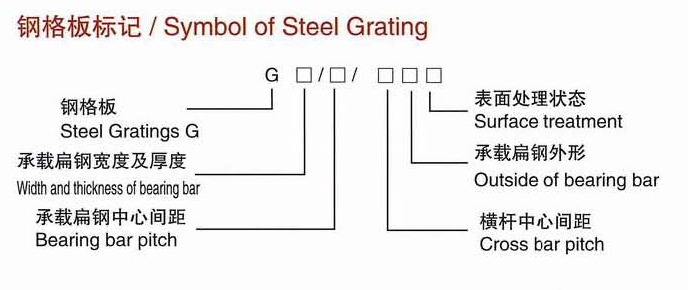
How to read a grating designation
A designation such as G325/30/100 identifies a 32 × 5 mm bearing bar, 30 mm bearing-bar pitch and 100 mm cross-bar pitch. Add the overall panel dimensions, bar surface, fabrication method and finish to make the order unambiguous. Confirm the notation used on the final drawing.
Bar layout and available options
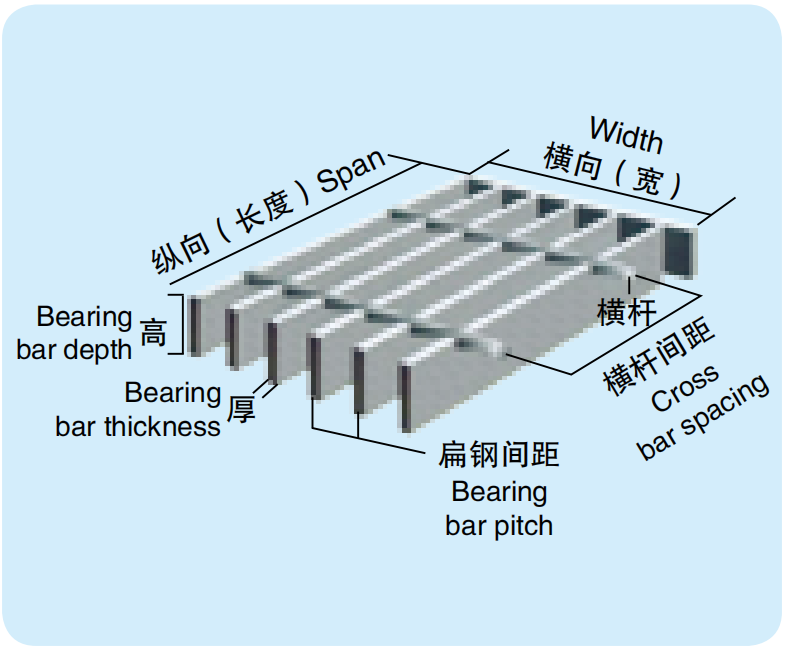
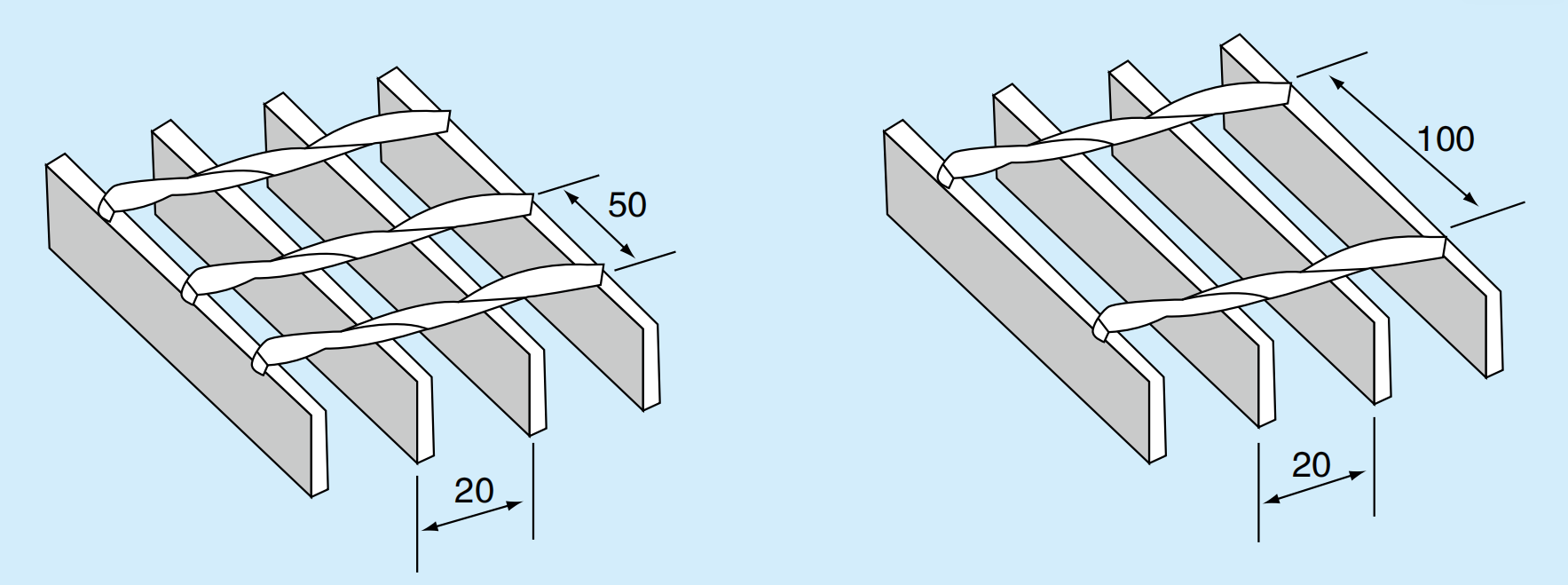
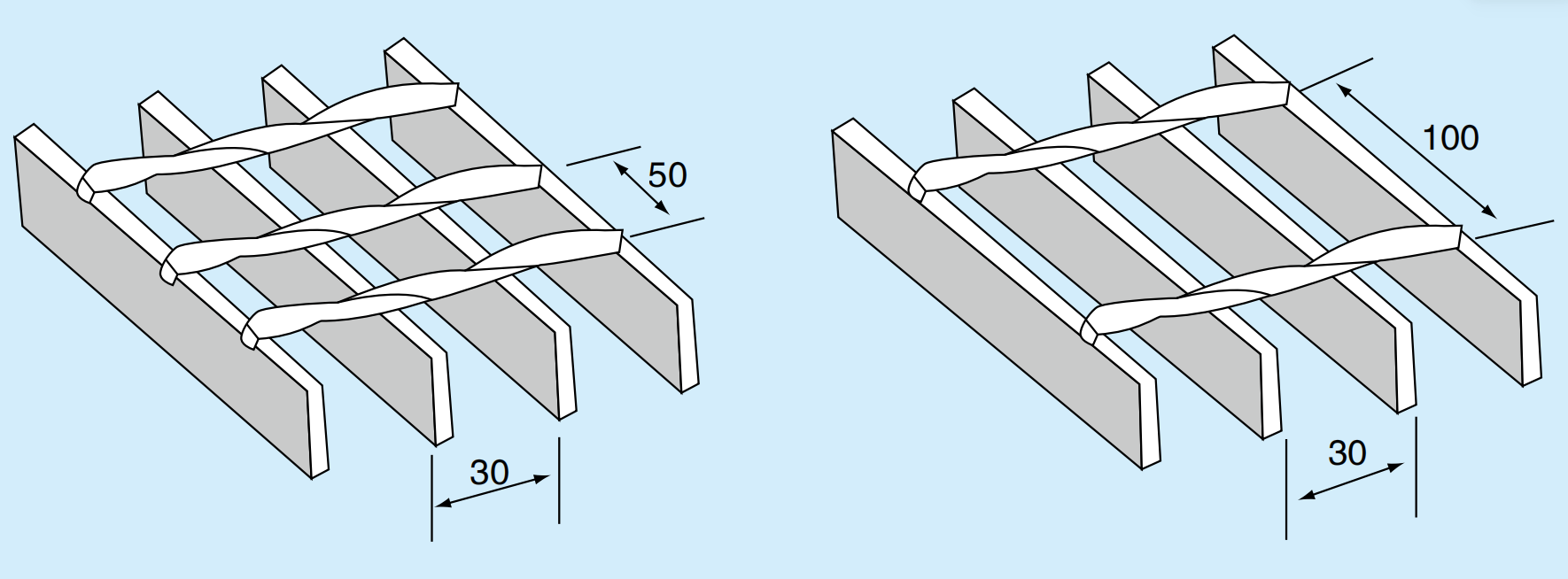
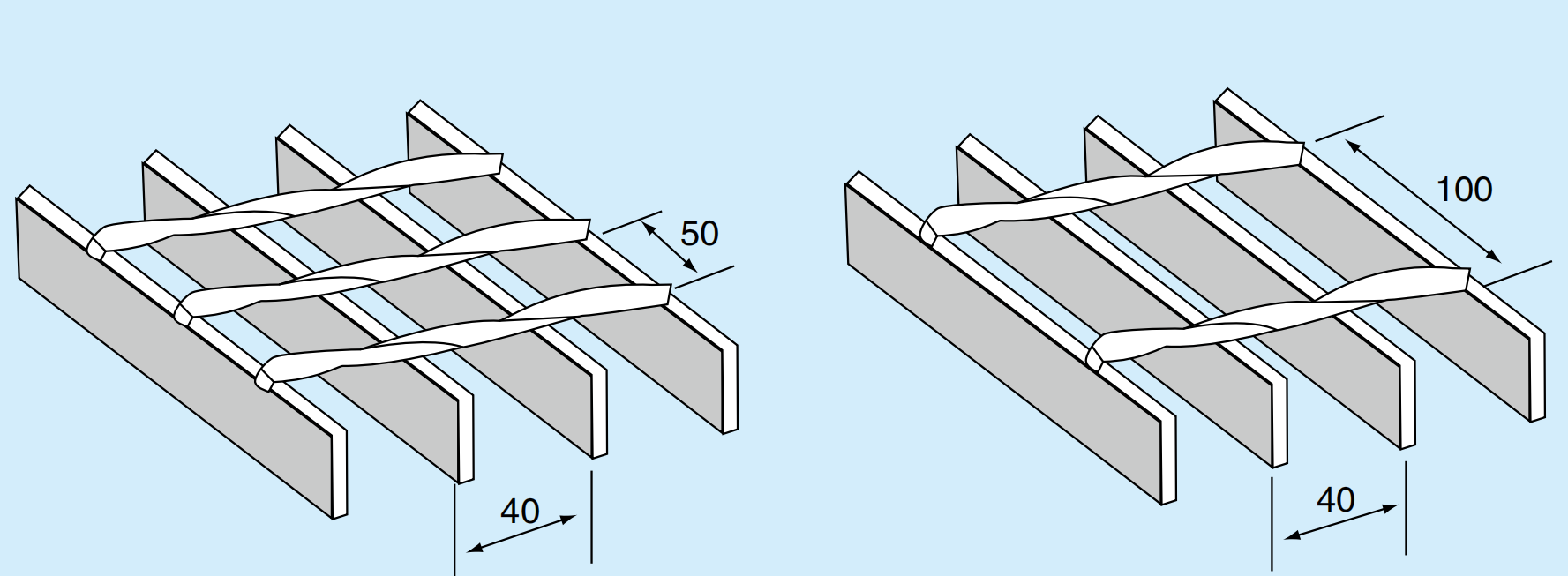
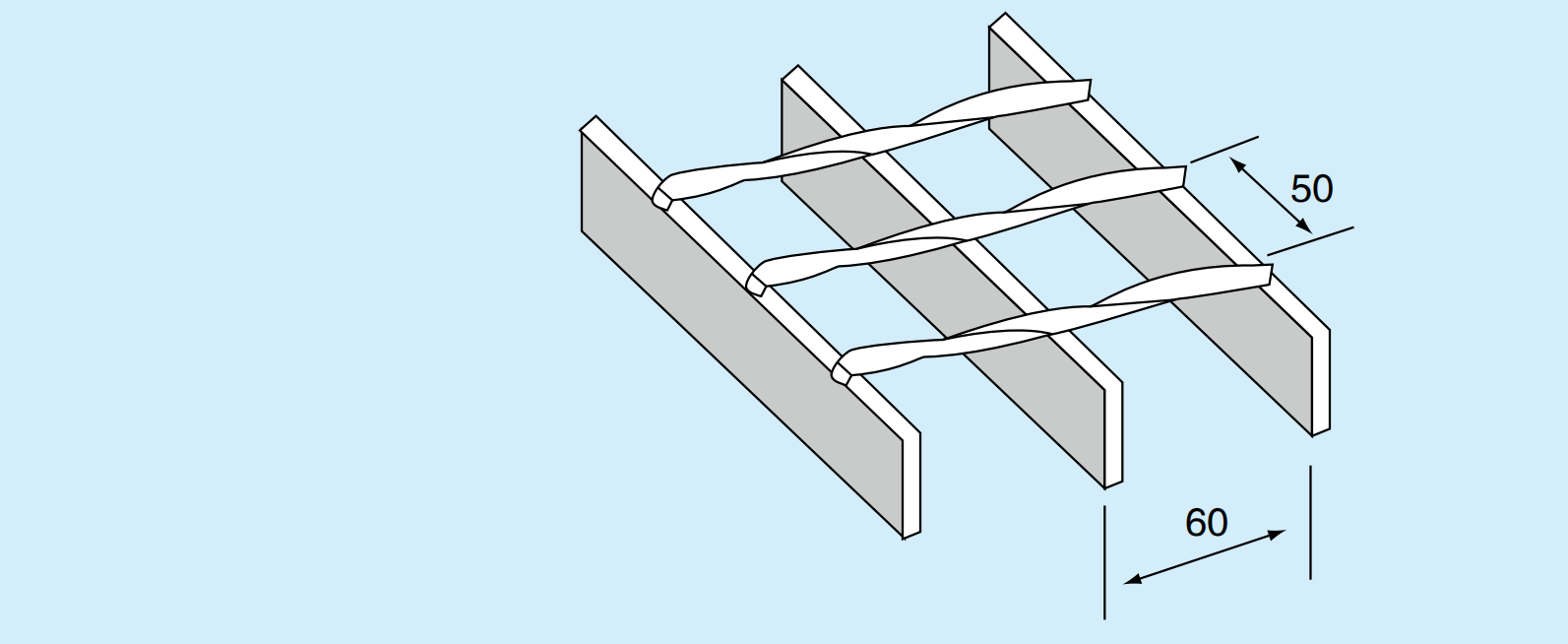
Bearing bars carry the primary load; cross bars connect and restrain them. Length is normally measured along the bearing bars, while the clear span is the unsupported distance between bearing points. These dimensions should be shown separately on the drawing.
| Option | Reference choices from the product sheet | Confirm for your order |
|---|---|---|
| Bearing-bar pitch | 15, 20, 25, 30, 33, 35, 38, 40, 50, 60, 80 or 90 mm | Opening size, load and required clear spacing |
| Cross-bar pitch | 30–100 mm; 50, 76 and 100 mm are shown as common choices | Fabrication layout and access needs |
| Bearing-bar surface | Plain or serrated; other sections by drawing | Site conditions and bar section |
| Finish | Hot-dip galvanized, painted or untreated | Coating standard, exposure and inspection basis |
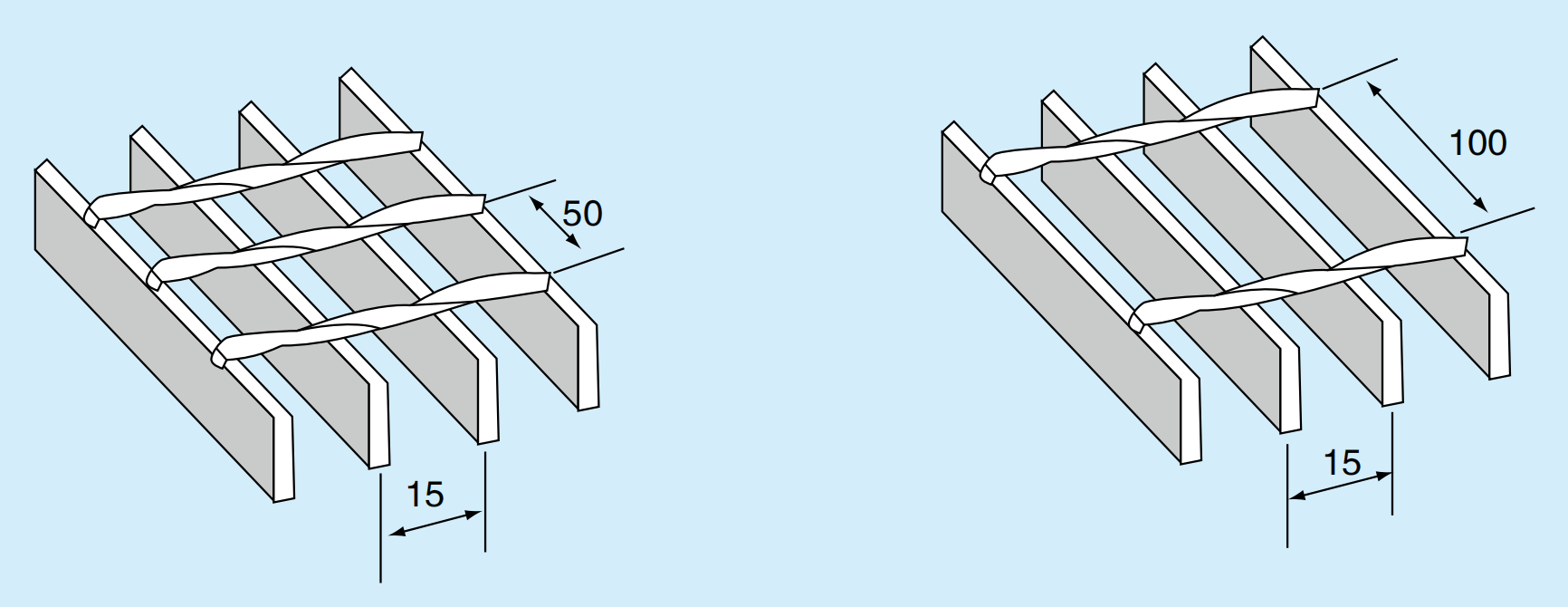
Common bearing-bar pitch series
The diagrams compare bar arrangements; they do not establish load capacity. Select the bar height, thickness, pitch and clear span together for the actual application.
Reference load and deflection tables
Compare the 30 mm and 40 mm pitch tables by grating designation and clear span. Values are reference data, not approval for a specific walkway, vehicle area or support arrangement. Confirm the calculation or test basis, steel grade, support conditions and allowable deflection before design use.