Start with what you know
Most wrong selections come from starting with the grate style instead of the site conditions. Begin with the opening dimensions and the traffic, then narrow the options.
Selection steps
- Measure the clear opening and the support or seating detail.
- Identify the load case: pedestrian, trolley, forklift or truck.
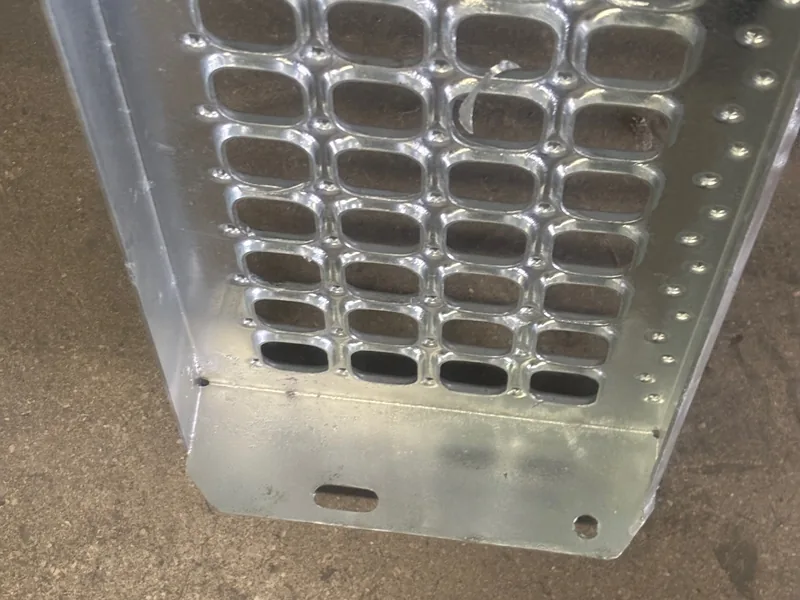
- Decide the opening size from drainage needs and foot safety.
- Choose the surface: plain or serrated, from the slip condition.
- Pick the material and finish from the environment.
- Choose the fixing: loose laid, clipped, bolted, hinged or locked.
Opening size and foot safety
- Wider openings drain faster but can catch heels and small wheels.
- In pedestrian areas, favour smaller openings for comfort and safety.
- In industrial areas, match the opening to the debris that must pass.
- Remember that a smaller opening passes less water.
Matching the load
- Pedestrian areas need far less capacity than vehicle routes.
- Forklift and truck wheels create concentrated loads that change the choice.
- Load class alone is not enough—span and support matter too.
- See Load Classes Explained.
Checklist before ordering
| Input | Why it matters |
|---|---|
| Opening and seating | Sets panel size and fit |
| Traffic type | Sets the load case |
| Environment | Sets material and finish |
| Slip condition | Sets plain or serrated |
| Access frequency | Sets hinged, removable or fixed |
Choosing Trench Drain Grates FAQ
What is the most common mistake?
Choosing by appearance before confirming the opening and the load case.
Do I need serrated grating?
If the surface will be wet, oily or sloped, yes; otherwise plain is usually fine.
Should it be hinged?
Only if the trench is opened regularly; otherwise removable or fixed is simpler.