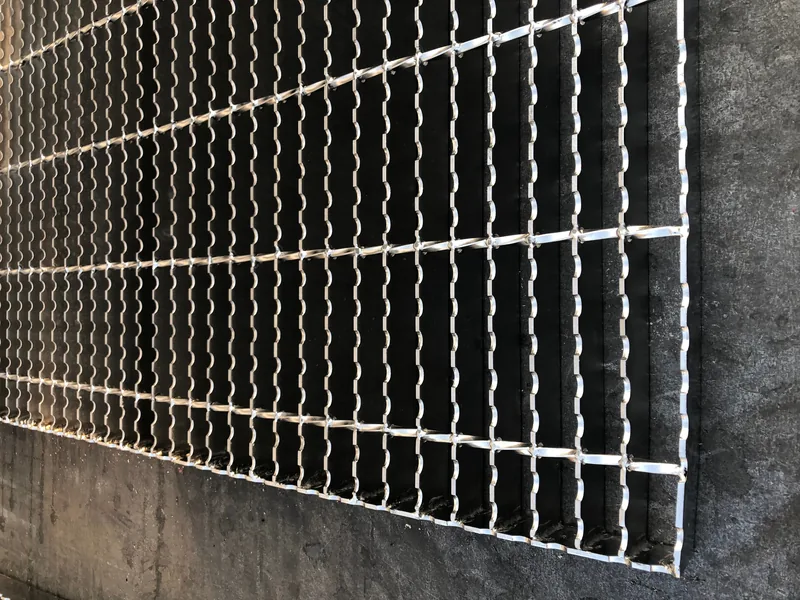
What is the difference?
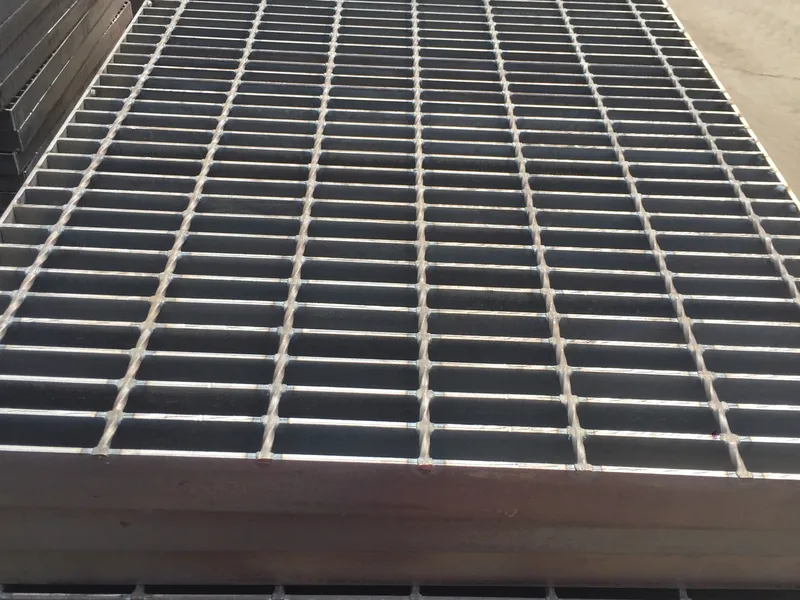
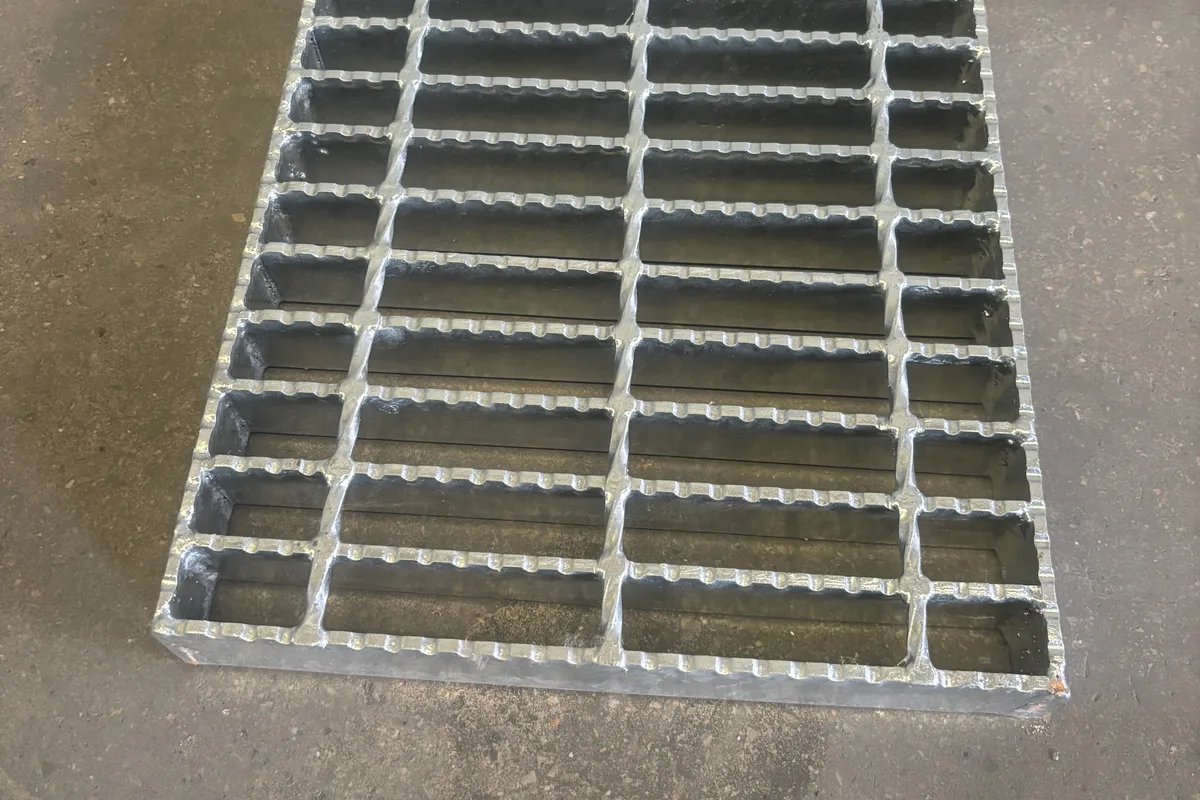
Plain and serrated grating share the same bars, pitches and load capacity. The only change is the profile of the bearing-bar top: plain is flat, serrated has a series of teeth. Those teeth interrupt the contact plane underfoot, which is what improves grip.
Plain vs serrated at a glance
| Feature | Plain | Serrated |
|---|---|---|
| Top surface | Flat and smooth | Teeth cut into the bar top |
| Grip | Lower | Higher |
| Cleaning | Easier to sweep and wash | Teeth can trap finer debris |
| Load capacity | Same for given bar size | Same for given bar size |
| Use | Dry, clean, level | Wet, oily, sloped, outdoor |
When to use plain
- Dry indoor floors, mezzanines and walkways
- Areas free of oil, water and contamination
- Where trolleys or rollers pass and easy cleaning matters
- Architectural or decorative grids
When to use serrated
- Outdoor or washdown areas that are often wet
- Floors with oil, grease or other contaminants
- Sloped walkways and ramps
- Any area where slip resistance is a priority
Performance trade-offs
- Serrated bars are slightly heavier and use a little more material per bar.
- The teeth can trap finer debris, so cleaning takes more attention.
- Teeth wear first under heavy abrasion; the flat portion still carries load.
- Neither profile changes the structural capacity for a given bar size.
Plain vs Serrated FAQ
Does serrated grating carry more load?
No. Capacity depends on bar size and pitch, not on the surface profile.
Can I add slip resistance to plain grating later?
No. Slip resistance comes from the bar profile, so specify serrated at order time.
Which is easier to clean?
Plain, because the flat surface sweeps and washes more readily.