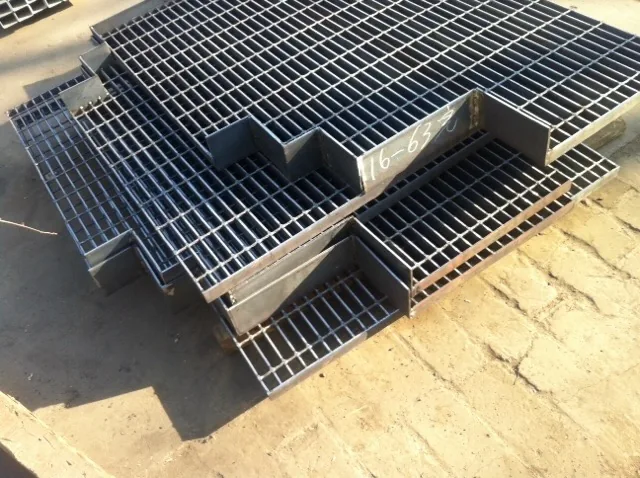
What is the difference?
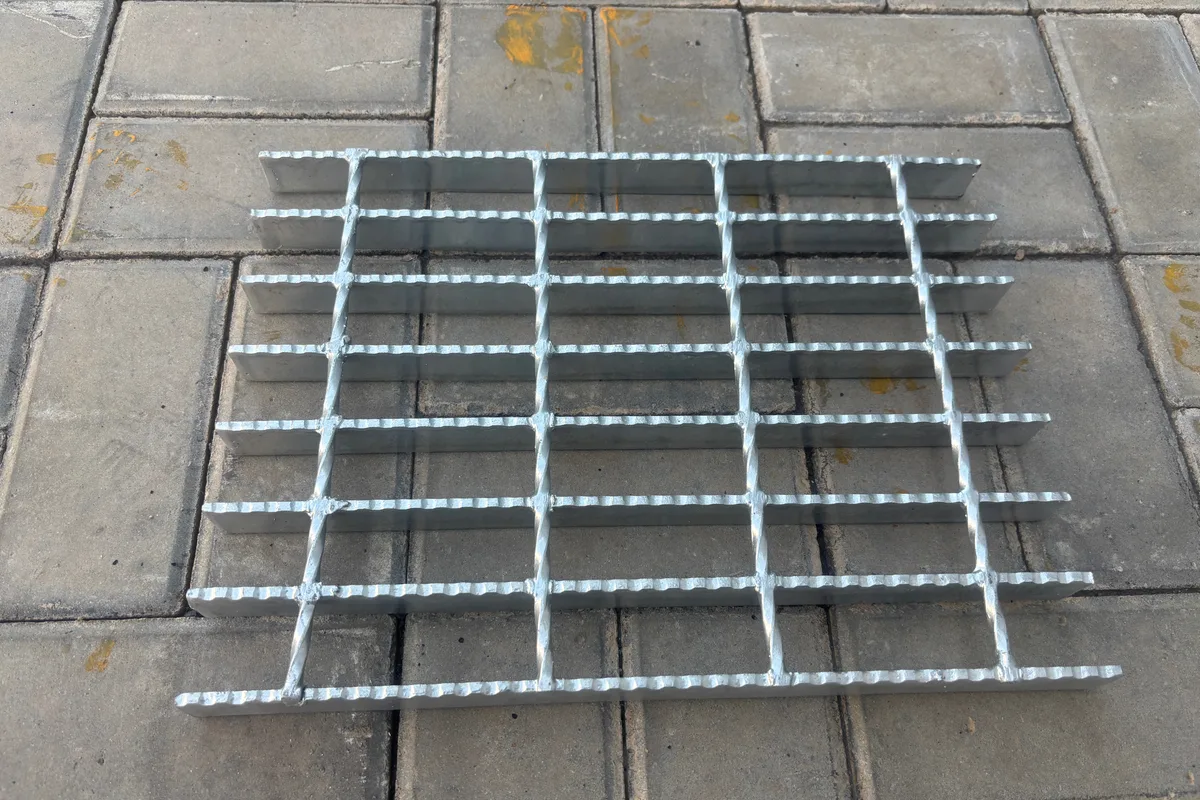
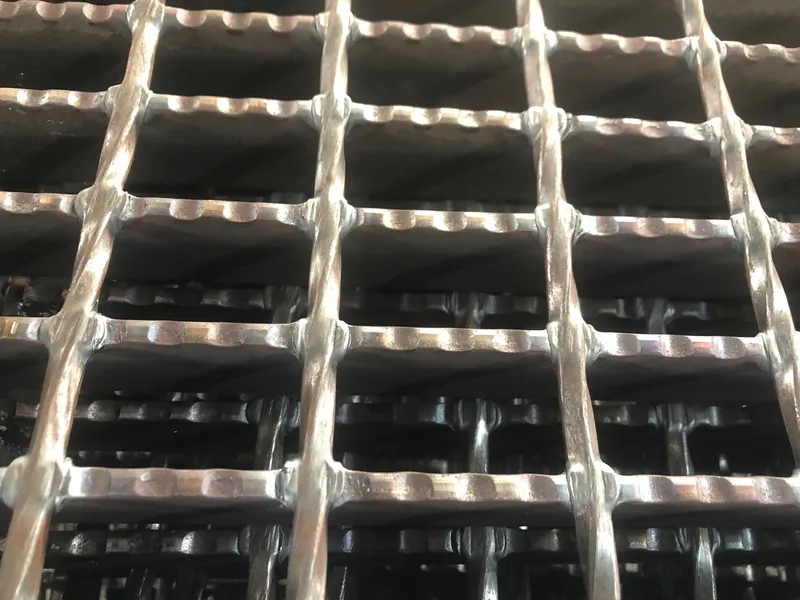
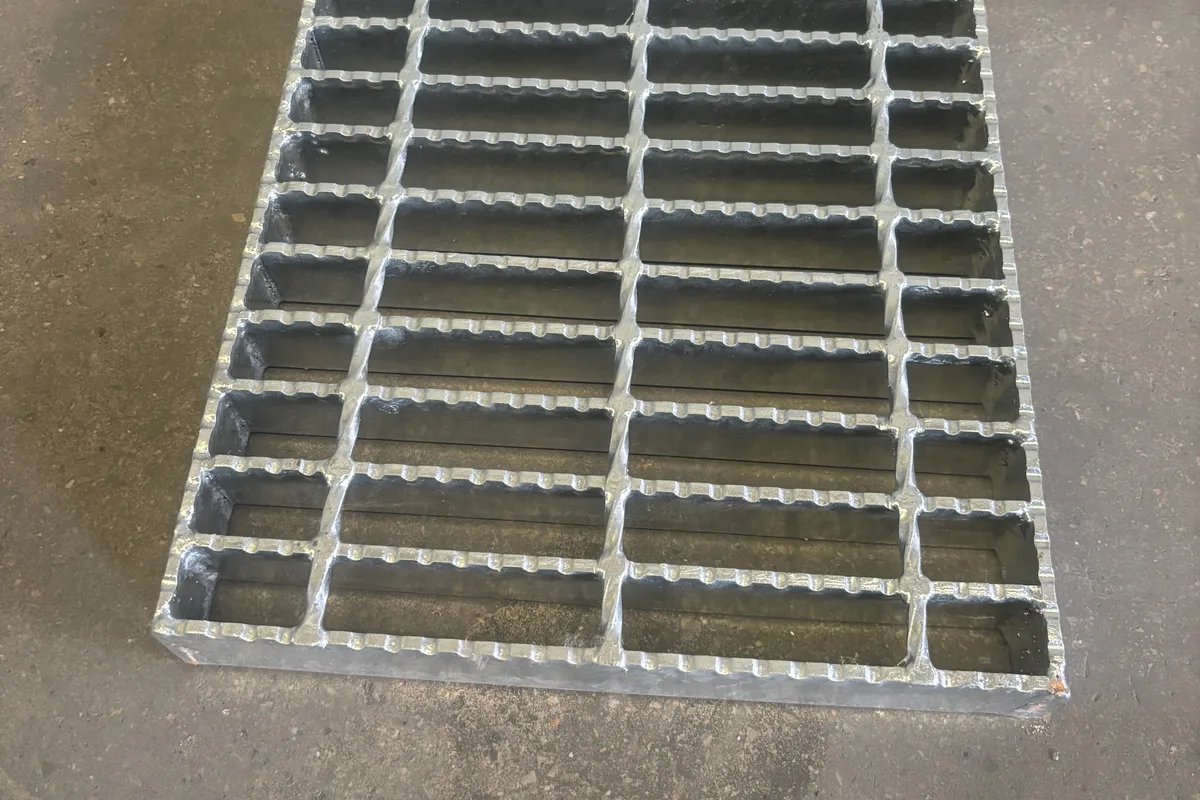
Welded and press-locked grating look similar from above but are made differently. Welded grating resistance-welds the cross bars to the bearing bars. Press-locked grating presses the cross bars into slots in the bearing bars so the metal deforms and locks—with no weld.
Welded vs press-locked at a glance
| Feature | Welded | Press-locked |
|---|---|---|
| Joint | Fused by resistance welding under pressure | Mechanically swaged, no weld |
| Surface | Twisted cross bars give natural grip | Smooth, clean top |
| Strength | Higher; joint is part of parent material | Lower; relies on mechanical interference |
| Best for | Heavy loads, long spans, industrial traffic | Architectural and light-to-medium loads |
| Not ideal for | Purely decorative fine screens | Heavy vehicle or forklift loads |
When to choose welded
- Heavy-duty platforms, mezzanines and walkways
- Vehicle, forklift or equipment traffic
- Long spans where joint strength matters
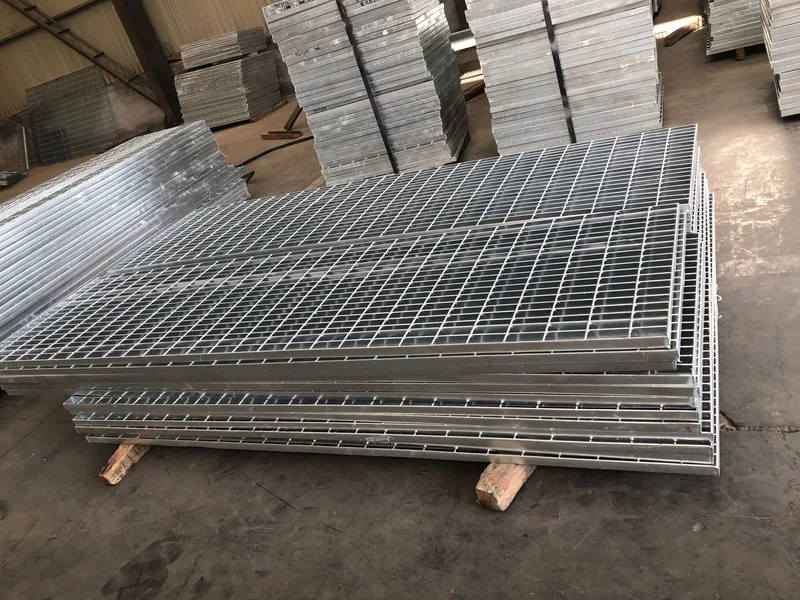
- General industrial flooring
When to choose press-locked
- Architectural facades, screens and sunscreens
- Clean indoor areas with light-to-medium loads
- Decorative or visible grids
- Where a smooth, uniform top is preferred
Welded vs Press-Locked FAQ
Which is stronger?
Welded, because the joint is fused into the parent material rather than held mechanically.
Can both be galvanized?
Yes. Both are hot-dip galvanized after fabrication.
Is press-locked cheaper?
Not necessarily; the choice should follow load and appearance, not price alone.