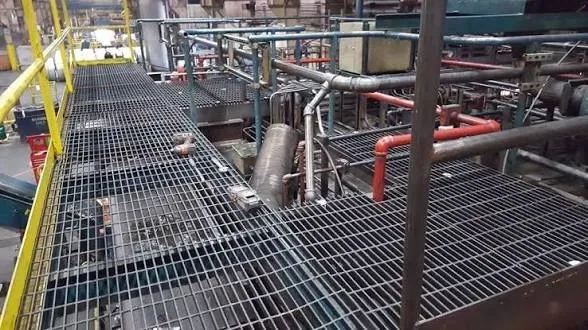
Before you start
Check that the trench or channel is complete, the seating is sound and the finished level is known. Most installation problems are really preparation problems.
Installation steps
- Prepare the seating: clean the ledge or frame and remove debris and sharp protrusions.
- Check the level: confirm the seating follows the finished floor level and the fall of the run.
- Dry-fit the panels: lay them in without fixing to confirm the fit and alignment.
- Set the bearing direction: confirm the bars span across the opening, not along it.
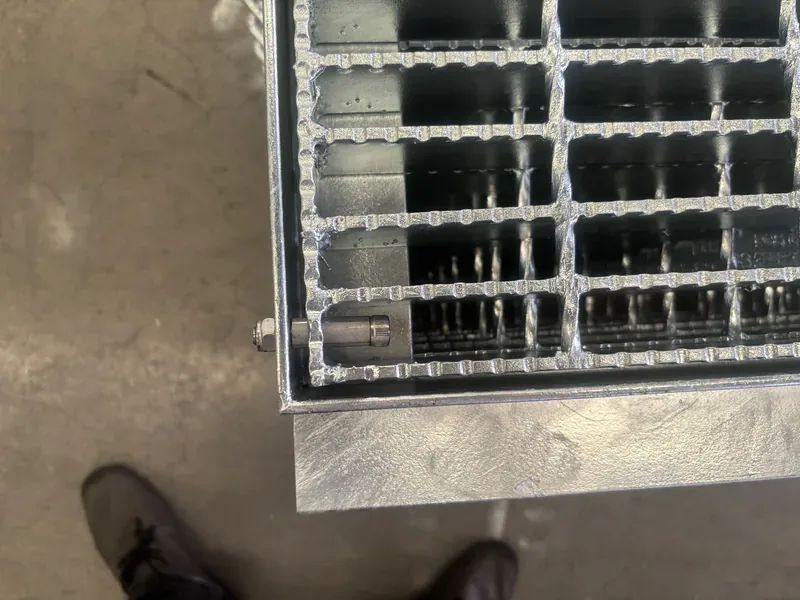
- Fix down: clip, bolt or weld the panels as specified.
- Final check: walk or drive the run and listen for movement or rattle.
Seating and fixing
- Bearing should be continuous along the seating, not at a few points.
- Allow for coating thickness on galvanized work when checking the fit.
- Use the specified clips or fixings; do not improvise with whatever is to hand.
- Where the run is long, keep panel joints aligned and tight.
Post-installation checks
- No rocking, rattling or movement under foot or wheel load.
- Top surface flush with the surrounding floor.
- All panels fixed; none loose or lifted.
- Drainage confirmed: water enters rather than running past.
Safety cautions
- Never leave an open trench unguarded during the work.
- Lift panels with proper handling; do not drag coated panels.
- Treat any field cut edges with zinc-rich paint on galvanized work.
- Do not load the run until fixings are complete and checked.
Installing Trench Grating FAQ
Why does my grate rattle?
Usually incomplete seating, missing fixings, or a gap left by coating thickness.
Can I cut panels on site?
Yes, but treat the cut edges on galvanized work with zinc-rich paint.
Which way do the bars run?
Across the opening, so the load is carried by the bearing bars.