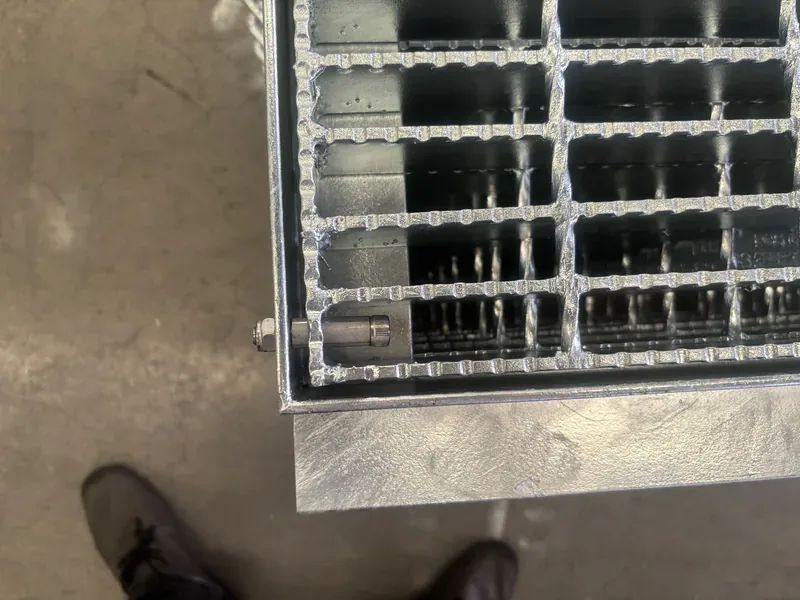
Why inspect routinely
Grating sits in wet, dirty, loaded conditions. Most problems develop gradually and give visible warning before they become a safety issue, which is what makes routine inspection worthwhile.
What to look at
- Coating condition: rust staining, bare patches, or damage at cut edges.
- Fixings: clips or bolts present, tight and not corroded away.
- Seating: the grate still bears properly and does not rock.
- Debris: blocked openings or sediment holding water against the steel.
- Hinges and locks: they operate freely and are not seized.
- Distortion: bent bars or a panel that no longer sits flat.
Cleaning
- Remove debris from the openings so water can enter.
- Clear sediment that keeps the surface permanently wet.
- Do not use methods that strip or abrade the coating.
- Rinse away cleaning chemicals rather than leaving them on the surface.
Minor repairs
- Touch up coating damage with zinc-rich paint on galvanized work.
- Replace missing or corroded clips and bolts.
- Re-seat a grate that has lifted rather than forcing it back.
- Lubricate hinges and locks that are stiff.
When to replace rather than repair
- Significant section loss from corrosion.
- Bent or cracked bars that affect the load path.
- A seat worn to the point that the grate cannot be made secure.
- Repeated failures at the same location—reconsider the specification.
Maintenance FAQ
How often should grating be inspected?
Set a routine that suits the environment; corrosive or heavily loaded areas need more frequent checks.
Can I repair coating damage?
Yes, touch up with zinc-rich paint on galvanized grating.
When should a panel be replaced?
When there is significant section loss, cracking, or a seat that cannot be made secure.